The Facts
Ms Thorne, 36, moved to Australia from overseas to marry Mr Kennedy, a 67-year-old property developer with assets of between $18 million and $24 million. She brought no substantial assets to the relationship.
About ten days before the wedding, with her family already in Australia for the ceremony, Mr Kennedy presented a pre-nuptial agreement and made it clear the wedding would not go ahead unless she signed. Her independent solicitor advised her in the strongest terms that the agreement was entirely inappropriate. She signed anyway, and shortly after the wedding signed a second, near-identical agreement, again against advice. Among other things, the agreements left her with nothing at all if the marriage ended within three years. The couple separated after less than four years.
What The High Court Decided
In Thorne v Kennedy [2017] HCA 49 the High Court unanimously set aside both agreements, restoring the trial judge's decision after the Full Court of the Family Court had reversed it.
- Undue influence. A majority (Kiefel CJ, Bell, Gageler, Keane and Edelman JJ) found Ms Thorne's free will had been substantially subordinated to Mr Kennedy's. She was, in effect, powerless.
- Unconscionable conduct. All seven justices found she was under a special disadvantage which Mr Kennedy knew of, had partly created, and exploited to obtain grossly unfair terms.
- Advice is not a cure-all. That she signed despite clear, strong legal advice was treated as evidence of the pressure she was under, not proof she had acted freely.
What Courts Will Look At
The plurality identified factors that may carry particular weight when a pre- or post-nuptial agreement is challenged:
- whether the agreement was offered on a take-it-or-leave-it basis, with no real room to negotiate
- the emotional circumstances of signing, including any express or implied threat to call off the wedding
- whether there was time for careful reflection
- the nature of the parties' relationship and their relative financial positions
- the independent advice received, and whether there was time to reflect on it.
Grossly unreasonable terms, even by the standards of agreements designed to depart from the default property regime, can themselves point towards undue influence.
The right advice at the right time
Thorne v Kennedy did not end prenups. Financial agreements remain a valuable way to protect family wealth, business interests, inheritances and children from earlier relationships. What the case ended was the assumption that a signature and a solicitor's certificate guarantee an agreement will stand. As Nettle J observed, the outcome would likely have been very different had the terms been raised at the outset of the relationship rather than on the eve of the wedding.
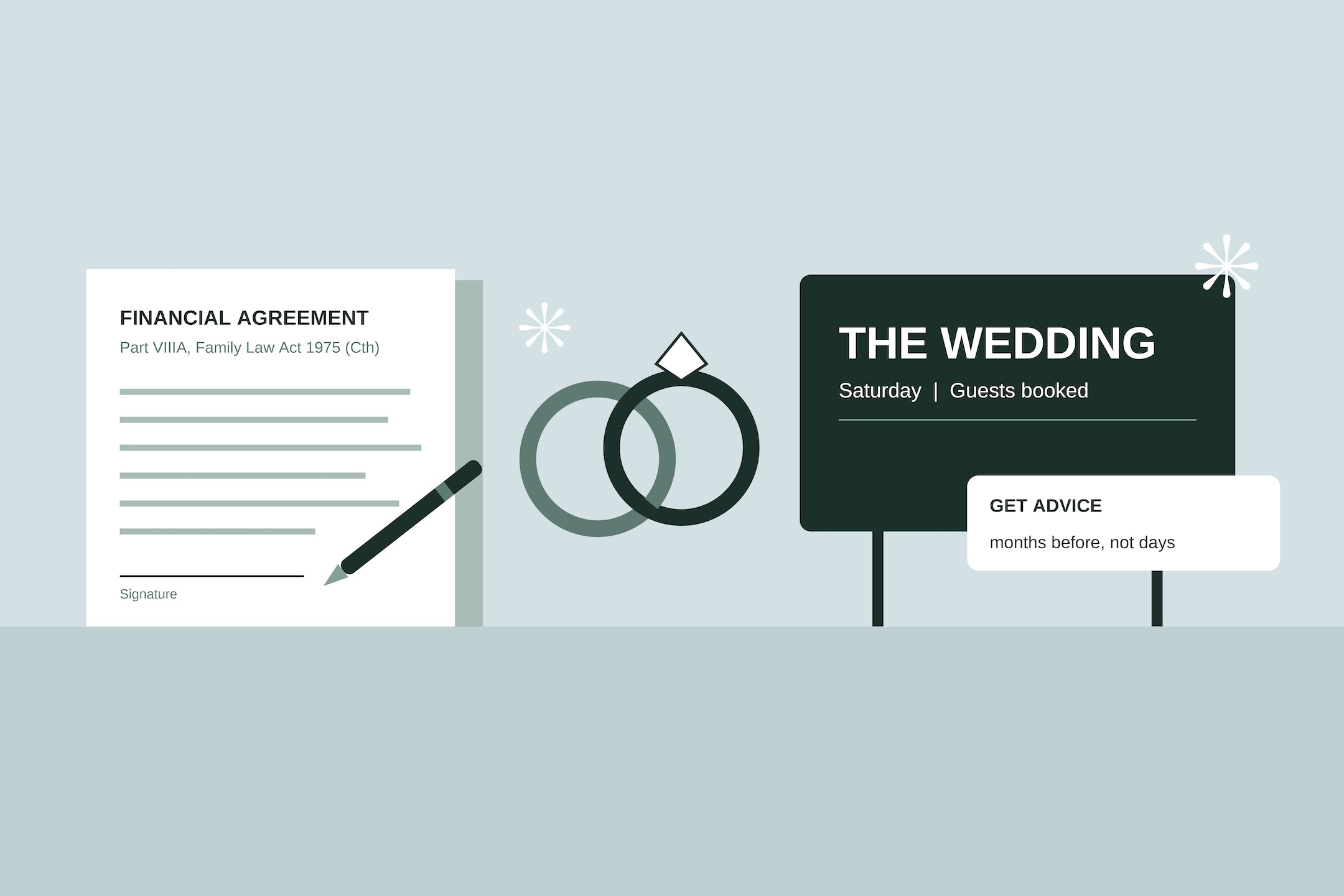
- Start early. Raise the agreement months, not weeks, before the wedding, ideally before dates are set.
- Negotiate genuinely. Exchange drafts, consider proposed changes and keep a record of the negotiation.
- Disclose fully. Both parties should understand the other's assets, liabilities and income.
- Keep terms within reason. An agreement that leaves one party with nothing invites challenge.
- Allow time to reflect. Each party needs time to receive, consider and act on independent advice.
- Review when life changes. A child, a business sale or an inheritance may warrant a fresh look.
The same principles apply to de facto couples and to agreements made during a relationship. The Family Law Act property reforms that commenced on 10 June 2025 are a further reason to have any existing agreement reviewed.
How Eventus Can Help
Our Family Law team, led by Melissa Patterson, advises clients in Melbourne, Sydney, Brisbane, the Gold Coast and Perth on financial agreements before, during and after marriage or a de facto relationship. We act both for the party seeking an agreement and for the party asked to sign one, with a focus on agreements that are fair, properly negotiated and built to withstand scrutiny.
If you are planning a wedding or moving in together, now is the time to talk to us. Contact Melissa Patterson or visit eventus.com.au/contact.
Important information
This article provides general information only and is current as at 16 October 2026. It does not constitute legal advice and should not be relied on as such. Thorne v Kennedy [2017] HCA 49; (2017) 263 CLR 85. Eventus Lawyers is the business name of Eventus Lawyers Pty Ltd.